Cast


Movie Info & Details
Release Year1971
Runtime0h 54m
LanguageFrench
CertificationNR
GenresDocumentary
Votes4
DirectorJean Eustache
WritersJean Eustache
TypeFeature Film
Rating6.8 out of 10
Cast2 credited
Also Known AsOdette Robert
About Odette Robert
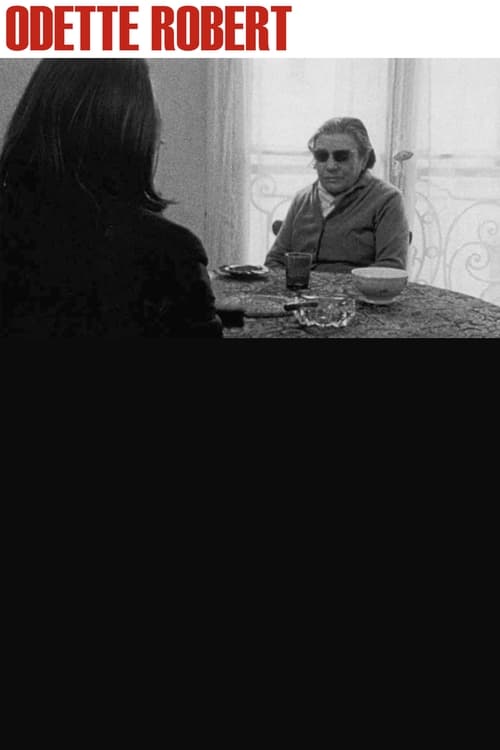
Eustache’s grandmother Odette Robert was a key figure in his life, serving as a substitute mother during much of his childhood (My Little Loves was dedicated to her). In 1971, he recorded an interview with her that went largely unseen until 2003—Eustache never screened the complete film publicly, although a radically truncated version was presented on television. In a string of long, stationary takes, the camera watches over Eustache’s shoulder while he pours countless glasses of whiskey and Odette tells the stories of her life. A number of her themes resonate with those of Eustache’s films: cruelty, male philandering, the Rosière festival of Pessac. Number Zero is a return to origins—of cinema and of the self—and an experiment in narration, both restrained and deeply personal.
Directed by Jean Eustache, Odette Robert leans on a strong ensemble — Jean Eustache, Odette Robert — to carry a story that balances spectacle with character.
The film landed with audiences for its craft and performances, and remains one of the most talked-about documentary titles of 1971.
Read More on the BlogUser Reviews
6.8
Community rating
Loading reviews…